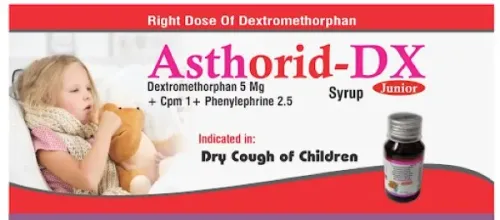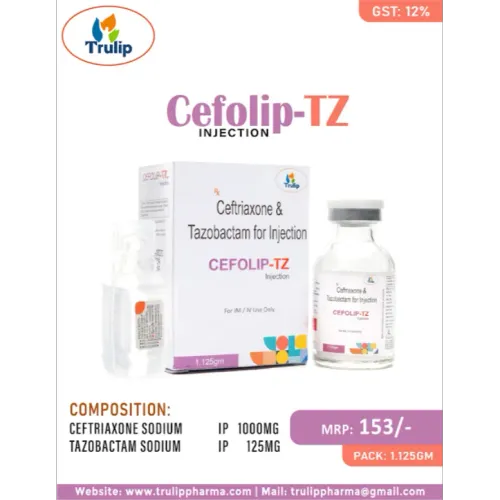

Before paying an advance, you need more than a product catalogue and a promised margin. This checklist helps you verify the supplier’s identity, licences, product files, portfolio economics and contract terms, then score several companies against the same decision gates.
Key takeaways
- Verify identity, bank ownership and signatory authority before paying an advance.
- Match every product SKU to the manufacturer’s licence and product documents.
- Remove products with weak local demand, saleability concerns or brand conflicts.
- Score supply, territory and working-capital terms using documented evidence.
Pass the legal and payment verification gate before paying an advance
No advance leaves your account until identity, licence, bank ownership and signatory authority agree across the documents. This is the core pharmaceutical franchise company verification gate.
- Match the legal entity name on the agreement, GST registration certificate, quotation, invoice and bank account. Reject any unexplained difference between that name and the account beneficiary.
- Check the GSTIN on the government portal and confirm the registered address. Request the PAN, incorporation or partnership document, authorised signatory’s name, and board authorisation or power of attorney where applicable.
- Obtain the wholesale-distribution authorisation and identify the licensed premises from which goods will be dispatched.
- Request the manufacturer’s drug manufacturing licence number, issuing authority, premises address, licensed dosage forms and product categories. For conventional formulations, check the Form 25 and Form 28 licence India requirements, or the corresponding loan-licence form when another company owns the authorisation.
- Ask who handles batch release, complaints, recalls, adverse-drug reactions and regulatory communication.
| Warning sign | What it indicates | Decision |
|---|---|---|
| Payment to an unrelated account | Bank ownership is unproven | Stop payment |
| Invoice from another entity | Contract and tax identity conflict | Reconcile or reject |
| Dispatch from an undisclosed premises | Licence may not cover the activity | Stop until verified |
The drug manufacturing licence must match the actual premises, products and manufacturing activity. No advance is payable until every discrepancy is explained in writing.
Build a product file and test whether the licence matches every SKU
A product file is the fastest way to expose a licence mismatch: create one for every proposed SKU, not one for the whole catalogue. Record the approved composition, strength, dosage form, pack size, label artwork, manufacturer, marketer and loan-licence holder, then compare the commercial label line by line with the licensed composition.
Request these documents for each SKU:
- Product licence covering the exact dosage form and product category
- Batch manufacturing record for a recent batch
- Recent, batch-specific certificate of analysis
- Stability data supporting the stated shelf life and storage condition
- Relevant assay, dissolution, sterility, microbial or other test reports
- GMP certificate showing the issuing authority, facility name, scope, validity period and covered dosage forms
A certificate of analysis should identify the batch number, manufacturing date, expiry date, specification or test-method references, assay or content results, dissolution where applicable, microbial limits where applicable and releasing quality unit. A sample COA or brochure proves nothing about the batch you will sell.
| Label or document term | Accountability relationship | Confirm in the agreement |
|---|---|---|
| Manufactured by | Physical production and manufacturing records | Batch release, deviations and supply continuity |
| Marketed by | Brand, promotion and commercial distribution | Artwork, claims, complaints and recalls |
| Loan-licence holder | Licence holder using another facility | Regulatory submissions, records and product authorisation |
Ask whether production is in-house or performed by a named contract manufacturer. Check for silent changes to strength, excipients, schedule category, warnings or therapeutic indication.
Request stability data for pharmaceutical products, especially liquids, sterile products, probiotics, biologics and moisture-sensitive products; an unsupported long shelf life creates recall risk, while a short evidence-based shelf life increases expiry exposure.
Filter the catalogue for local demand, legal saleability and brand conflict
Do not accept a pharma franchise product portfolio because it is large; accept only SKUs you can move legally and repeatedly. Compare every product with local therapeutic demand, prescribing patterns, competitor density, dosage form, strength and pack size.
Ask prescribers and your sales team which therapies generate repeat prescriptions, then test that demand against the proposed minimum order quantity and likely pack-level velocity.
Screen each SKU against four commercial and legal tests:
| Dimension | Compare | Reject or investigate |
|---|---|---|
| Demand | Repeat prescriptions against MOQ and pack-level velocity | Slow rotation or excessive opening stock |
| Range | Duplicates, near-identical strengths and weak additions | Catalogue growth without a new selling opportunity |
| Saleability | Prescription restrictions against your customers’ legal authority | Customers cannot stock or distribute it |
| Economics | Margin against expiry, returns and working capital | Discount conceals poor economics |
For every brand, verify product registration details, brand owner, label-marketer and the party authorised to use the artwork. Run a medicine brand trademark search and check medicine databases for similar names in the same therapeutic category and market. Similar names invite dispensing errors, objections, relabelling costs and withdrawal.
Obtain written confirmation of ownership and dispute responsibility.
Check catalogues, visual aids and WhatsApp content against the approved label and evidence. The 2024 Uniform Code for Pharmaceutical Marketing Practices is a useful benchmark; unsupported cure, superiority or comparative claims expose both marketer and distributor.
Separate trade margin from controls. For National List of Essential Medicines products, verify the NPPA price ceiling, pack-size calculation, permissible retail price and mandatory price display under the Drugs (Prices Control) Order, 2013.
Test whether the agreement protects supply, territory and working capital
A workable agreement proves supply performance, territory protection and cash recovery before you place the second order. Request SKU-level historical fill rate, average dispatch lead time, back-order frequency, shortage-allocation policy and the number of approved manufacturing sites.
| Supply model | Benefit | Interruption risk | Control required |
|---|---|---|---|
| Single contract manufacturer | Simpler oversight | One-site failure can stop supply | Written contingency plan |
| Dual-source supply | Reduces dependency | Different batches can drift | Controlled composition, specifications and artwork |
Define pharma franchise territory protection in writing. Cover geography, customer classes, online sales, institutional tenders, e-commerce fulfilment, hospitals, sub-distributors, duration, performance conditions and the supplier’s right to appoint another distributor. Make exclusivity conditional on a stated fill rate and dispatch standard.
Compare a minimum order quantity for medicines with expiry and replenishment behaviour, not the discount alone. The contract must state minimum remaining shelf life at dispatch, mixed-case rules, batch-size constraints, FEFO duties, an expiry return policy, and credit for damaged or recalled stock.
Require a documented complaint, adverse-drug-reaction and recall process that names notification deadlines, pharmaceutical batch traceability, recall-cost allocation, stock reconciliation, replacement or credit terms and the authorised regulatory contact. You should trace each batch from your invoice to downstream customers and returned stock.
Calculate gross-to-net margin after schemes, freight, taxes, testing, sales materials, expiry losses and working capital. A high nominal margin fails when forced mixed cases or unrecoverable returns consume the cash.
Score the finalists with evidence-based decision gates
Use the same evidence-based supplier scorecard for every finalist. This pharmaceutical distributor checklist supports a fair pharma franchise company comparison and keeps catalogue size, sales promises and advertised margins out of the decision.
| Gate | Evidence to check | Score |
|---|---|---|
| Legal identity and payment controls | Legal entity, GSTIN, drug licence, authorised signatory and bank beneficiary match | 0, 1 or 2 |
| SKU documentation and GMP scope | Exact SKU licence, batch-specific COA, manufacturing site and GMP scope match | 0, 1 or 2 |
| Market and brand fit | Demand, legal saleability, brand ownership, competition and pack-level velocity | 0, 1 or 2 |
| Supply and recall controls | Fill-rate history, lead time, manufacturing sites, traceability and recall duties | 0, 1 or 2 |
| Contract economics | MOQ, expiry returns, credit, freight, testing costs and gross-to-net margin | 0, 1 or 2 |
Score 0 when evidence is missing or inconsistent, 1 when present but incomplete or unverified, and 2 when it matches the exact product, facility and proposed terms. Double product-fit and contract-economics scores when they determine your cash exposure; show the maximum beside the result so catalogue size cannot conceal a legal failure.
Set automatic disqualifiers before scoring:
- No matching drug licence or unexplained bank account
- Unclear brand ownership or missing batch-specific COA
- Undisclosed contract manufacturer
- Refusal to state recall and expiry responsibilities
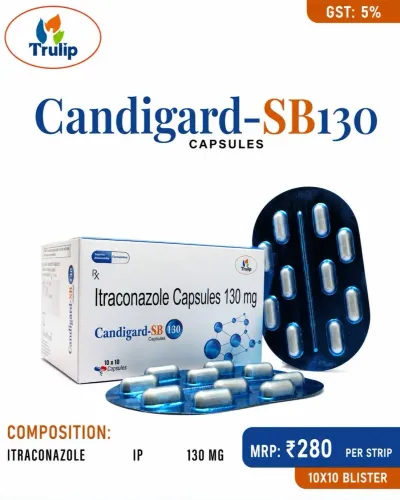
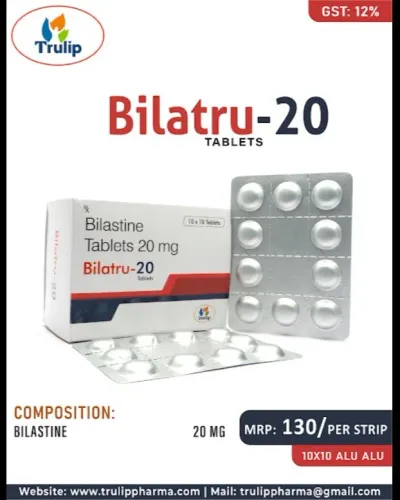
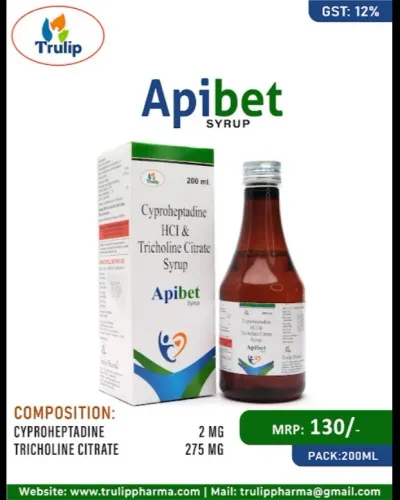
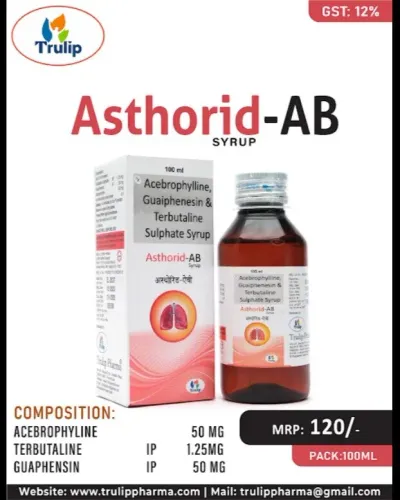
Ask every finalist identical written questions and retain replies with the score sheet. Arrange independent testing of retained market samples for high-volume or higher-risk SKUs. Trulip Pharma belongs in the same PCD pharma due diligence process: identical requests, SKU scoring and contract checks. Choose the highest evidence-adjusted score that passes every mandatory gate.
Frequently asked questions
What must you verify before paying a pharmaceutical franchise company?
Confirm the company identity, licence details, bank-account ownership and signatory authority across the documents.
How do you check whether a pharmaceutical licence covers every product?
Build a product file and match each SKU to the licence, including the product name, form and strength.
Which products should a distributor remove from a franchise catalogue?
Remove products with weak local demand, legal saleability concerns or conflicts with existing brands.
What should a pharmaceutical franchise agreement protect?
Check the agreement for clear supply obligations, territory rights and terms that limit pressure on your working capital.