A catalogue, margin promise, or “WHO-GMP” statement cannot show whether a PCD supplier is the right fit for your territory. You need one comparison record that ties each product to a licensed site, each price to its real landed cost, and each promise to written evidence before you pay an advance.
Key takeaways
- Use identical comparison sheets for every manufacturer.
- Ask for the Form 20B or 21B licence copy.
- Compare landed cost, expiry risk, and expected commercial return.
- Secure territory rights and written support terms before ordering.
Build One Comparison Sheet for Every Manufacturer
Use one comparison sheet per manufacturer, with identical fields and evidence requirements. This turns a PCD pharma manufacturer comparison into a side-by-side decision instead of a contest between catalogues and sales claims.
| Comparison field | Record for every manufacturer | Evidence or calculation |
|---|---|---|
| Legal identity | Company name, GSTIN, premises, and whether it is a manufacturer, marketer, loan-licence or third-party manufacturer | GST record, agreement, manufacturing licence |
| Product portfolio | Product range, therapeutic segments, target-territory demand, composition overlap, and pediatric or adult use | Approved product list, local prescription review |
| SKU permission | Product name, strength, composition, dosage form, and licence or permission reference | Match each SKU to the licence; check fixed-dose combinations |
| Manufacturing capability | Dosage forms, batch sizes, and site-specific licence scope | Confirm tablets, capsules, oral liquids, injectables or biologicals |
| GMP evidence | Inspection date, premises, covered dosage forms, and certificate scope | Reject a “WHO-GMP certified” claim that lacks scope or date |
| Commercial terms | Minimum order quantity, price, credit, lead time, expiry on dispatch, and freight responsibility | Calculate landed cost and working-capital days |
| Risk response | Replacement terms, complaint contact, recall procedure, and batch traceability | Request test reports, certificates of analysis, and customer-quantity reconciliation |
Score every manufacturer against the same weights, then mark missing documents as “unverified” rather than awarding an assumed pass. Do not count catalogue entries twice when strengths share one composition or when a product has no clear local market.
Keep the sheet dated so revised prices, licences, and product permissions do not silently alter your decision.
Verify the Legal Identity, Licence Scope, and Product Documents
The named company must match across its GSTIN, manufacturing licence number, invoices, labels and agreement. If a brand owner, marketer, loan-licence holder or distributor appears instead, identify who legally manufactures, releases, recalls and accepts product liability before placing an order.
| Document | Check | What failure means |
|---|---|---|
| GST registration | Match legal name, address and GSTIN with the quotation and invoice | You may contract with the wrong entity |
| Drug licence details | Confirm the premises, licence number, dosage forms and product categories | A licence for tablets does not authorise injectables |
| Manufacturing licence | Check validity, approved site and named products or categories | Catalogue listings may exceed the licensed scope |
| GMP certificate | Check inspection date, premises and covered dosage forms | “WHO-GMP certified” proves nothing outside that scope |
| Batch COA | Match batch number, specifications, methods, results, release status and authorised quality-person approval | “COA available” is not batch release evidence |
Request copies that show the manufacturing site and verify that tablets, capsules, oral liquids, injectables or biologicals are covered as offered. Ordinary-drug licences and licences for drugs under Schedules C and C(1) follow different forms and requirements.
Check a sample label for the batch number, manufacturing date, expiry date, active ingredients and strengths, storage conditions, maximum retail price where applicable, manufacturing-licence details, and the correct Schedule H, H1 or X warning. A polished pack does not correct missing particulars.
Tie the product specification and COA to the Indian Pharmacopoeia, another declared pharmacopoeia or an approved in-house specification. Finally, request the written recall procedure, complaint timelines and batch-wise customer reconciliation record; a replacement promise is not a recall system.
Test Product Quality and Calculate the Real Commercial Return
A product is usable only when the exact batch passes document, label, and physical checks. Ask for a batch-specific certificate of analysis, not a promise that a COA is “available.”
- Match the batch number on the COA, carton, and strip or bottle. The COA must show test methods, specifications, results, release status, and approval by the authorised quality person.
- Confirm that each method and limit follows the Indian Pharmacopoeia, another declared pharmacopoeia, or an approved in-house specification.
- Check the label for active ingredients and strengths, manufacturing date, expiry date, manufacturing-licence details, storage conditions, maximum retail price where applicable, and the correct Schedule H, H1, or X warning.
- If bioavailability or bioequivalence evidence applies, match the report to the supplied strength, dosage form, and formulation. Different strengths and earlier formulations do not prove the current SKU.
- Match the GMP inspection scope to the dosage form. A certificate covering solid tablets does not establish compliance for sterile injections.
Calculate landed cost per saleable unit: purchase price, freight, insurance, taxes that you cannot recover, unloading, and expected transit breakage. Then subtract the value of expiry write-offs, slow-moving stock, and uncredited shortages before comparing margins.
Record the minimum order quantity, remaining shelf life at dispatch, and the reorder threshold. A low price becomes expensive when replacement applies only above a large reorder, near-expiry returns are excluded, or you bear recall and transit-loss costs.
Test the written complaint and recall procedure with a batch-number exercise. It should identify affected customers and quantities, set complaint-classification timelines, reconcile returned stock, and state replacement credits. A “replacement guarantee” alone does not demonstrate a workable recall system.
Examine Supply Operations, Territory Rights, and Partner Support
A workable manufacturer proves its promises with records, not a catalogue. Ask for dated dispatch data showing lead time, order fill rate, back-orders, shortage notices and the corrective action taken for missed supplies.
Request these operating documents:
- A dispatch and shortage procedure naming the contact, escalation time and replacement process.
- A written complaint procedure with classification timelines, investigation ownership and closure records.
- A recall procedure, plus a simulated or historical case showing the affected batch, customer quantities, recovery status and reconciliation.
- The current expiry-return policy, including notice period, eligible stock condition, credit or replacement method and transport responsibility.
- Evidence of batch traceability from released stock to every customer invoice; a brand catalogue cannot execute a reliable recall.
Put territory exclusivity in measurable terms. The agreement must identify the state, district or PIN code, product list, channel and duration, then address online orders, institutional tenders, existing accounts and sub-stockists. Otherwise, another channel can supply your territory without technically breaching a vague promise.
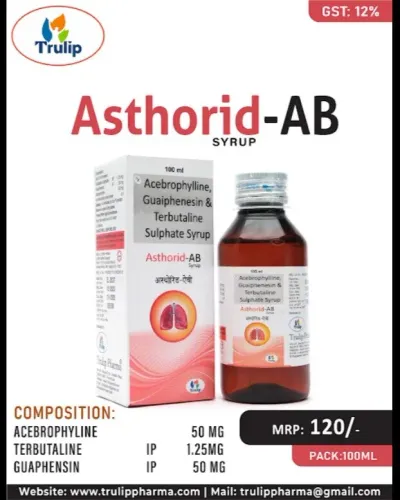
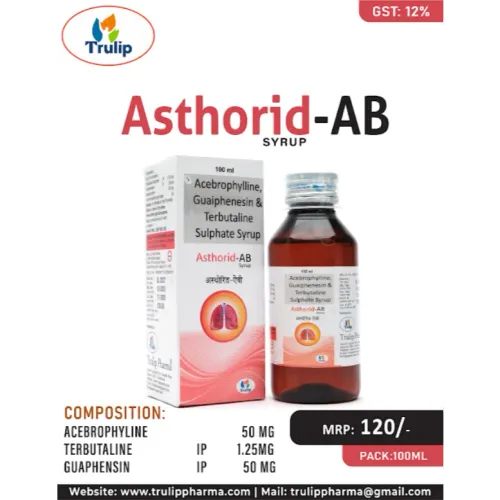
For a cough-syrup portfolio such as Trulip Pharma’s, record the marketing support in deliverables rather than verbal assurances:
- Materials supplied, approval responsibility and delivery date
- Field-visit or training commitments
- Product-claim review and adverse-event escalation
- Sales targets, renewal conditions and termination notice
Compare the promised service with two recent partner references and the agreement’s remedies. A replacement guarantee alone does not prove recall capability, and exclusivity without a breach remedy is only a sales statement.
Set a Go-or-No-Go Test Before the First Order
Do not sign until every claim is converted into evidence and a failed critical check means “no-go.” Create a dated decision record, score each manufacturer against the same criteria, and set minimum scores before commercial discussions begin.
1. Request and file the manufacturing licence, GSTIN, GMP certificate with inspection date and dosage-form scope, product composition, sample test report or certificate of analysis, pro forma invoice, and written return policy. Reject certificates that do not cover the proposed products or premises.
2. Identify the legal manufacturer, brand owner, marketer, loan-license holder, and distributor on the label, invoice, licence, and contract. Require the contracting party to warrant its right to use the brand name after searching conflicting registered and pending marks.
3. Test recall readiness with a simulated or historical case. Request the written recall procedure, complaint-classification timelines, reconciliation method, and proof that one batch can be traced from raw materials and packing through release, dispatch, customer, and quantity.
4. Write territory rights as state, district, pin code, channel, product list, and duration. Record treatment of online sales, institutional tenders, existing accounts, and sub-stockists in the PCD pharma franchise agreement.
5. Rank price, MOQ, lead time, replacement terms, complaint response, traceability, and territory protection. Complete manufacturer due diligence before paying or signing; a replacement guarantee alone is not recall capability.
Frequently asked questions
What should distributors compare for every PCD pharma manufacturer?
Use one sheet with identical fields for licence details, product documents, quality evidence, pricing, supply terms, territory rights, and partner support.
Which legal and product documents should a distributor verify?
Check the manufacturer’s legal identity, licence scope, Form 20B or 21B licence copy, product details, batch information, and supporting quality documents.
How can distributors calculate the real commercial return?
Include product price, freight, taxes, promotional costs, minimum order quantities, expiry risk, credit terms, and the margin left after serving your market.
What should a distributor confirm before placing the first order?
Confirm supply timelines, replacement handling, territory rights, sales support, documentation, and a clear go-or-no-go decision against your comparison sheet.