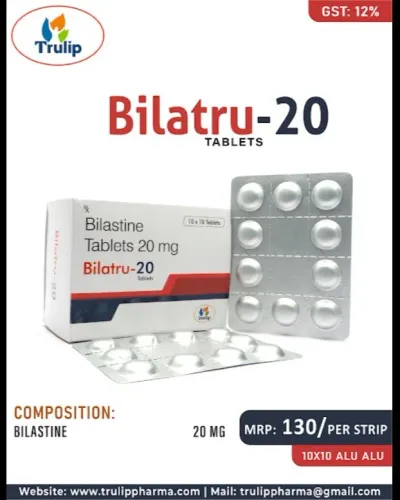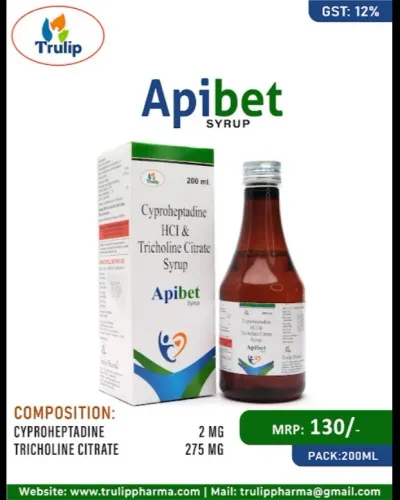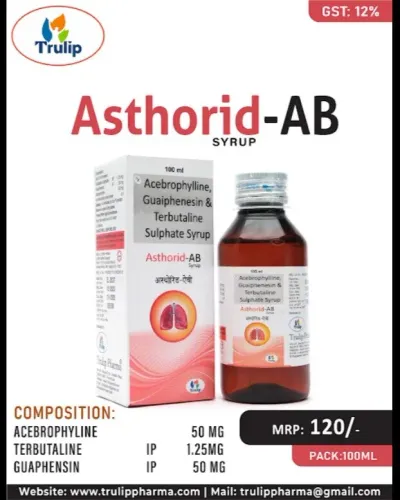
A brochure rarely tells you whether a pharma franchise offer will protect your cash, comply with Indian drug rules, or supply stock when you need it. By the end, you will have a weighted comparison sheet, a document-checking process, and contract questions that separate a workable distribution arrangement from an attractive sales promise.
Key takeaways
- Score every company against the same weighted criteria.
- Ask for Form 20B, Form 21B and manufacturer licence copies.
- Calculate landed cost before comparing discounts or margins.
- Read territory exclusivity, supply commitments and exit terms word for word.
Build a weighted comparison sheet before comparing offers
Give every pharma franchise company the same seven criteria, the same 1-to-5 score, and a fixed weight before you read its offer. This turns a pharma franchise evaluation checklist into a usable pharma franchise company comparison instead of a reaction to the biggest discount.
| Criterion | Weight | Evidence to compare |
|---|---|---|
| Product quality | 25% | Batch certificates of analysis, approved composition, IP monograph and manufacturer specification |
| Margin | 20% | Landed cost, usable MRP, expiry exposure and realistic retailer margin |
| Supply reliability | 15% | Stock history, lead time, fill rate and written shortage procedure |
| Regulatory documentation | 15% | Product permission, licence details, labels, invoices and quality agreement |
| Territory protection | 10% | Written area, exclusions, duration and breach remedy |
| Marketing support | 10% | Approved visual aids, samples, training and delivery schedule |
| Payment terms | 5% | Credit period, minimum order, freight, taxes and replacement terms |
Score each company from 1 to 5, multiply by the weight, and keep the evidence beside every number. Reject unsupported claims rather than awarding a neutral score.
A high quoted discount does not prove a better PCD pharma franchise. Check whether the formulation is scheduled under the Drugs (Prices Control) Order, 2013, appears in the National List of Essential Medicines, or carries a notified ceiling price calculated with a 16% retailer margin.
An inflated or unusable MRP can make the advertised margin meaningless. Use the same spreadsheet for every offer, then investigate only the companies with strong weighted scores.
Verify licences, manufacturers and quality records
A GST certificate, incorporation certificate or marketing brochure does not prove manufacturing authority. Check the actual manufacturing premises, licence number and dosage form against official records before accepting an offer.
Request and match these documents:
- Manufacturing licence Form 25 for ordinary formulations.
- Form 28 licence for products covered by Schedules C or C(1).
- Loan licence Form 25A 28A when a contract manufacturer operates under a loan-licence arrangement.
- Product licence documents, approved labels, package inserts and product permission records.
- The GST invoice and a batch-wise certificate of analysis naming the legal manufacturer.
| Evidence to compare | What must match | Failure risk |
|---|---|---|
| Manufacturing licence | Legal name, site address, licence number and dosage form | Unauthorised production or wrong facility |
| Pack and invoice | Manufacturer, batch number, composition and strength | Mislabelled or untraceable stock |
| Approved documents | Indication, combination and claims | Recall or promotional violation |
| Quality records | Batch release, deviations, stability data and complaints | No defensible investigation |
Ask whether the brand owner or the licensed manufacturer releases each batch. Put that answer in a quality agreement covering change notification, artwork approval, recalls, returned goods, destruction, document retention and audit rights.
Inspect evidence of Schedule M GMP implementation: a functioning quality-control unit, written procedures, validation and qualification records, change control, deviation investigations and recall procedures. ISO 9001 alone is not pharmaceutical GMP proof. Request the manufacturer’s revised Schedule M gap-closure plan if implementation remains incomplete.
Call two existing distributors and ask whether batch documents arrive on time and complaints receive written responses.
Compare landed cost and product-level earning potential
Calculate the landed cost of pharma products per saleable unit, not per invoice unit. Start with the supplier price, then add freight and non-recoverable GST; record recoverable input tax credit separately because it affects cash flow but not the final cost.
| Cost item | Calculation | Decision test |
|---|---|---|
| Purchase price | Invoice value ÷ saleable units | Compare the same strength and pack size |
| GST, freight and MOQ | Add freight; separate recoverable GST; divide MOQ spend by units | Reject a low price that ties up cash in slow stock |
| Trade margin / retailer margin | Net selling price minus your landed cost and retailer margin | Use the actual retailer margin, not the brochure percentage |
| Expiry replacement pharma | Value of units likely to expire before sale | Confirm who replaces stock, the notice period and freight responsibility |
| Stock rotation | Opening units ÷ conservative monthly sell-through | Match MOQ and shelf life to realistic replenishment |
Use orders from comparable outlets to estimate monthly sell-through, then test a slower case. If a 500-unit MOQ takes eight months to sell and only six months remain before expiry, the quoted margin is fictional.
Check the approved MRP against the Drugs (Prices Control) Order, 2013. A scheduled formulation in the National List of Essential Medicines can carry a notified ceiling price, and the ceiling-price formula includes a 16% retailer margin; an inflated MRP does not create usable profit.
Ask for written terms covering breakage, recalls and unsold stock, then calculate profit after replacement units and failed sales—not after the first invoice.
Test supply performance and read exclusivity clauses literally
Place two or three small test orders before signing and record the order fulfilment time from purchase order to dispatch. Compare the invoice, dispatch note and received quantities; a brochure cannot show whether shortages, substitutions or unexplained delays are routine.
Ask for the supplier’s written process for back-order handling, damaged cartons, expiry replacement and recall communication. Confirm who pays freight, how quickly complaints are acknowledged, and whether batch tracing reaches the original invoice and dispatch record.
Check the MOQ against remaining shelf life and replenishment lead time: a low unit price with a large minimum order can leave you holding expired stock.
Treat pharma monopoly rights as contractual rights, not sales language. An exclusive territory pharma franchise arrangement protects you only when the agreement defines exactly where, for how long and against which competing sales.
Check that the agreement states:
- The territory by named districts, states or customer type.
- The duration, renewal terms and exclusivity exceptions.
- Minimum purchase or performance conditions and a cure period before cancellation.
- Whether institutional tenders, hospitals, online sales and existing accounts are excluded.
- Expiry replacement, breakage allowance, recall reimbursement and freight responsibility.
- Ownership and disposal of unsold stock when the relationship ends.
- Remedies if the company appoints another distributor inside your territory.
Reject wording such as “exclusive at management discretion.” Require written notice for changes, objective breach triggers and a signed schedule naming the protected products. Ask two current distributors whether these clauses are enforced in practice.
Score the shortlist and negotiate the evidence-based choice
A score is useful only when every point has evidence behind it. Give each shortlisted company a score from 0 to 5, multiply it by your pre-set weighting, and record the document, call or sample that supports the number. Do not let a polished presentation compensate for an unsupported licence or repeated stock shortages.
| Criterion | Suggested weight | Evidence for a high score |
|---|---|---|
| Product quality | 25% | Licence, batch-wise certificate of analysis, stability data and quality agreement |
| Landed margin | 20% | Verified invoice, freight, tax, expiry exposure and realistic resale price |
| Supply reliability | 15% | Dispatch records, lead time, fill-rate evidence and stock policy |
| Territory protection | 15% | Precise written boundaries, exceptions and breach remedy |
| Regulatory documentation | 10% | Matching manufacturer, licence number, label, invoice and product permission |
| Marketing support payment terms | 15% | Written deliverables, payment dates, credit period and deductions |
Before signing, use the scorecard to negotiate gaps rather than asking for a general discount. Put batch release, change notification, artwork approval, stability data, deviations, recalls, returned goods, destruction, document retention and audit rights into the quality agreement. Separate those decisions from sales targets.
Run pharma distributor due diligence on complaint handling as well: request the escalation route, response-time commitment, sample-retention practice, adverse-event process and recall communication procedure. Ask how an invoice and dispatch record would trace a distributed batch.
A supplier such as Trulip Pharma belongs in the same comparison, judged against identical evidence and weights, not against reputation or product breadth. Choose the highest defensible score, then attach the promised support, territory, response times and supply remedies to the pharma franchise agreement.
Frequently asked questions
What should you include in a pharma franchise comparison sheet?
Use the same 1-to-5 score and fixed weight for each company across seven criteria, including licensing, quality records, landed cost, earning potential, supply performance and exclusivity terms.
Which licences should you verify before choosing a pharma franchise company?
Ask for copies of the company’s Form 20B and Form 21B licences, the manufacturer’s licence, product documentation and available batch or quality records.
How do you compare the real cost of pharma franchise products?
Calculate landed cost by adding the product price, GST, freight, handling and other charges, then compare that figure with realistic selling prices and product-level gross earnings.
What should you check in a pharma franchise exclusivity clause?
Read the defined territory, product list, exclusivity period, minimum order requirements, supply conditions, competing appointments and termination rights literally.