A large catalogue, low opening price and promise of territory protection do not show whether a PCD franchise will fit your market or remain workable after the first order. By checking product demand, SKU documents, supply controls, commercial terms and operating workload, you can compare companies on evidence rather than promotional claims.
Key takeaways
- Match products to local prescriptions, pharmacy demand and your sales model.
- Ask for a Form 20B licence copy and batch-level records for every SKU.
- Inspect storage controls, expiry protection and the supplier’s actual replenishment capacity.
- Put territory rights, support obligations and commercial terms in writing.
Match the product range to your local market, not the catalogue count
A territory needs repeat demand, not a catalogue with 500 names. Match the range to local disease patterns, prescriber specialties, pharmacy demand and your sales model before you commit to stock.
Build a complete product-range checklist covering:
- Therapeutic categories that local doctors prescribe regularly
- Prescription and OTC mix, with Schedule H, H1 and X products identified; “OTC” is a commercial label, not a complete legal classification
- Paediatric and adult products suited to the patients your territory serves
- Dosage forms, strengths and pack sizes that pharmacies actually request
- Seasonal products that sell beyond one short campaign
- Brands that can compete on formulation, price and availability rather than promotion alone
Ask five pharmacies and several local prescribers which products move repeatedly, which brands they already prefer and which specialties generate referrals. Compare those answers with the company’s sales records, not just its catalogue. A range built around dermatology is a poor fit if your network mainly serves general physicians and paediatricians.
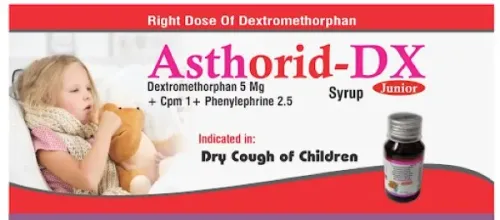
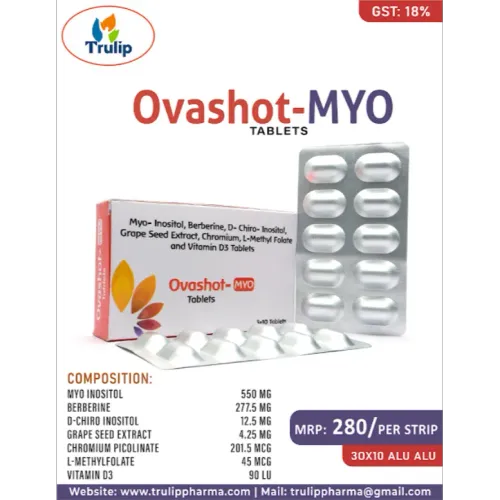
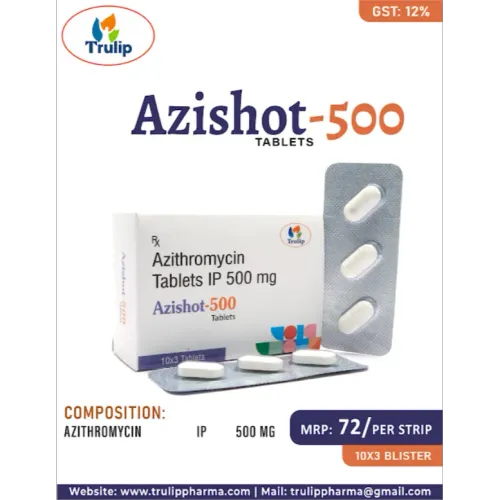
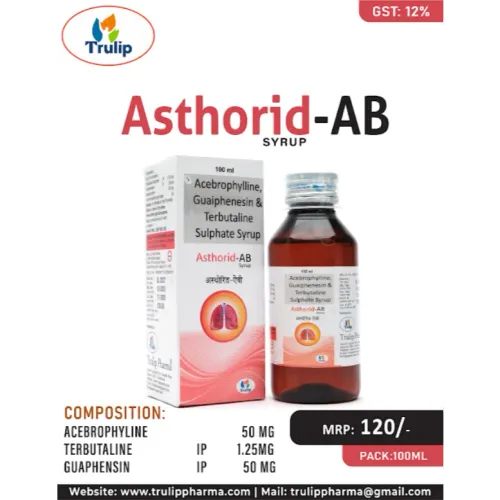
Check every proposed SKU before ordering: composition, strength, dosage form, pack size, label classification and product permission. Separate medicines from nutraceuticals and health supplements, which follow different Food Safety and Standards requirements. Choose the company whose range supports your territory and business model, even if its catalogue is smaller.
Verify every SKU against licences, permissions and batch records
Each SKU needs a document trail linking the catalogue entry to an authorised formulation and a released batch. Reconcile every item by product name, composition, strength, dosage form and pack size. A manufacturing licence for one tablet strength does not authorise a syrup, higher strength or different presentation.
Request these records before appointment:
- A current manufacturing licence showing the licensed site, licence number, dosage forms and manufacturer’s legal name.
- The product permission or approved product list identifying the formulation, composition, strength and pack size for that SKU.
- The final label and package insert, including manufacturer details, batch number, manufacturing date, expiry date and required warnings.
- A batch-specific Certificate of Analysis (COA) stating the actual batch number, test specifications, results, manufacturing date, expiry date and release status.
- The batch manufacturing record or batch-release summary, with deviations and corrective actions disclosed when they affected release.
- The regulatory classification: Schedule H, H1 or X where applicable. Do not accept “OTC” as a complete legal classification; Schedule H1 sales require purchaser and prescriber records retained for three years.
| Document | What it proves | Red flag |
|---|---|---|
| Manufacturing licence | The site may manufacture the dosage form | Different site or expired licence |
| Product permission | The exact formulation is authorised | Catalogue strength is absent |
| Batch COA | The supplied batch passed testing and was released | Generic or undated COA |
A WHO-GMP certificate supports quality-system review, but it does not replace product permission or authorise sale of a particular formulation.
Test supply capacity, storage controls and expiry protection
A catalogue of 300 SKUs proves little if popular medicines are produced in small, irregular batches. Assess supply at batch level and ask for evidence before paying for stock.
1. Request the normal batch size, minimum order quantity, lead time from confirmed order to dispatch, dispatch frequency and stock availability by SKU. Ask for the latest stock statement, not a verbal assurance. Require a written back-order policy covering notification, allocation and cancellation.
2. Check storage controls for the products you will receive. Request warehouse temperature records, calibration dates for thermometers, pest-control records and the product’s labelled storage range. Confirm cold-chain requirements, validated transport, temperature-monitoring devices and action taken after a temperature excursion.
3. Inspect expiry protection in the agreement. It should state the minimum remaining shelf life at dispatch, FEFO rotation, expiry-replacement eligibility, credit-note timing and who bears responsibility for stock held at your premises. A replacement promise without a time limit can leave your cash trapped in unsaleable inventory.
4. For the actual batch supplied, obtain the batch number, manufacturing date, expiry date, certificate of analysis, test specifications and release status. A generic or undated COA does not prove that your delivered batch was tested.
Ask whether an approved alternate manufacturing site exists and request its name and approval status. Compare the answer with past dispatch records; repeated substitutions, unexplained delays or unavailable batch documents are reasons to reduce the opening order or stop.
Compare support, commercial terms and territory rights in writing
Treat support as a workflow, not a promise from a sales representative. Ask to see onboarding training materials, the order confirmation process, complaint handling instructions, batch-traceability records and the recall or withdrawal procedure. The supplier should show how it identifies every customer who received a specified batch.
| Area | Evidence to demand | Warning sign |
|---|---|---|
| Operating support | Named contact, training schedule, order-confirmation format, complaint form, response times and escalation route | “Your representative will handle everything” |
| Safety reporting | Adverse-drug-reaction intake form stating who assesses seriousness, what information is collected and how reports reach the Pharmacovigilance Programme of India | No written pharmacovigilance route |
| Supply terms | Minimum remaining shelf life at dispatch, FEFO stock rotation, expiry-replacement rule, credit-note deadline, minimum order quantity, lead time and back-order policy | Replacement promised without timing or responsibility |
| Territory exclusivity | Agreement names the district or state, covered products, online sales, institutional tenders, company representatives and existing distributors | “Exclusive area” without defined boundaries |
| Breach protection | Remedy for channel conflict and a minimum supply commitment | Exclusivity that disappears when another distributor is appointed |
Test territory exclusivity before signing by asking for a current distributor map and written confirmation that your named products and channels are reserved. Also check whether the contract allows cancellation, credit, or compensation when the supplier breaches the restriction.
Use a weighted scorecard and evidence-based due diligence
Score each company against the same evidence, then multiply each score by its weight; do not let a large catalogue offset weak documentation or unreliable supply.
| Criterion | Weight | Evidence to score |
|---|---|---|
| Regulatory and batch release | 25% | Manufacturing licence, product permission, actual-batch Certificate of Analysis, batch number, dates and release status |
| Supply capacity | 20% | Batch size, minimum order quantity, lead time, stock position, alternate site and back-order policy |
| Quality system | 20% | Named quality-assurance contact, complaint procedure, traceability, recall workflow and ADR escalation route |
| Territory and agreement | 15% | Named territory, products, online and institutional channels, breach remedy and minimum supply commitment |
| Support and references | 10% | Written operating procedures and existing partner references from comparable territories |
| Test order | 10% | Correct documents, intact delivery, usable shelf life and accurate invoice |
Set a pass mark before reviewing offers, and reject any company that cannot produce the evidence behind its score. Ask existing partner references whether complaints receive a documented response, not just a sales call. Run a test order before committing to opening stock.
Whether you assess Trulip Pharma or another supplier, request the quality-assurance contact and confirm who forwards suspected adverse drug reactions to the Pharmacovigilance Programme of India. A high weighted score without verifiable records is not a safe appointment.
Calculate the workload and identify when a PCD franchise is the wrong fit
A PCD franchise is unsuitable if its daily administration exceeds your staff, cash flow or compliance capacity. Build a weekly workload estimate before signing: stock forecasting, order placement, invoice checks, expiry monitoring, returns, complaint handling and prescription-only selling require time beyond occasional doctor visits.
Check whether you can manage these duties:
- Rotate stock by first-expiry, first-out, record damaged or near-expiry packs, and claim replacements within the agreed deadline.
- Keep separate records for Schedule H1 sales, including purchaser and prescriber details, for three years.
- Route adverse-event reporting to a named contact who assesses seriousness, collects patient and product details, and forwards the report promptly.
- Reconcile batches, licences, invoices and delivery records when a complaint, recall or inspection occurs.
The wrong partner can multiply the workload through short-dated dispatches, unclear expiry credits, incomplete batch documents or a catalogue packed with slow-moving products. Do not choose on margin or catalogue size alone. Reject the opportunity if the agreement leaves compliance ownership, complaint escalation, prescription controls or unsold-stock responsibility unclear.
Frequently asked questions
How should you match a PCD pharma product range to your territory?
Prioritise products that fit local disease patterns, prescriber specialties, pharmacy demand and your sales model instead of choosing by catalogue size.
What documents should you verify for each PCD pharma SKU?
Request the applicable manufacturing or marketing permissions, a Form 20B licence copy where relevant, product details and batch records. Check that the documents identify the same product, strength and manufacturer.
How can you test a PCD company’s supply and expiry controls?
Ask about production lead times, minimum order quantities, replenishment capacity, storage temperature controls, batch traceability and the remaining shelf life delivered to you.
What should a PCD pharma franchise agreement state?
Record the territory boundaries, exclusivity conditions, product coverage, pricing, credit terms, minimum orders, replacements, promotional support and termination process.
When is a PCD pharma franchise the wrong fit?
It is a poor fit when you lack local prescriber or pharmacy access, cannot fund opening stock and follow-up orders, or cannot manage compliance, sales visits and inventory.