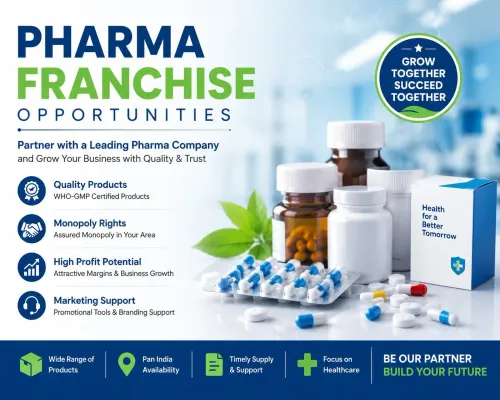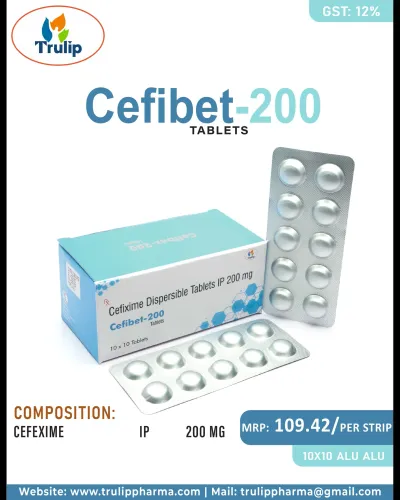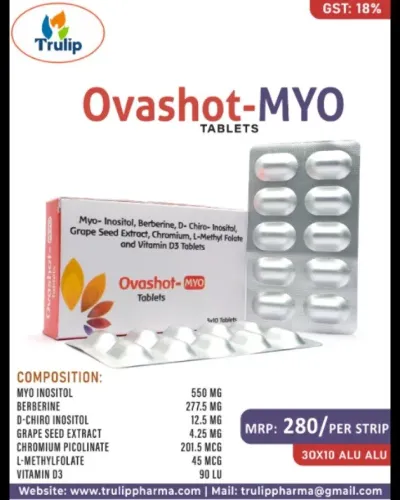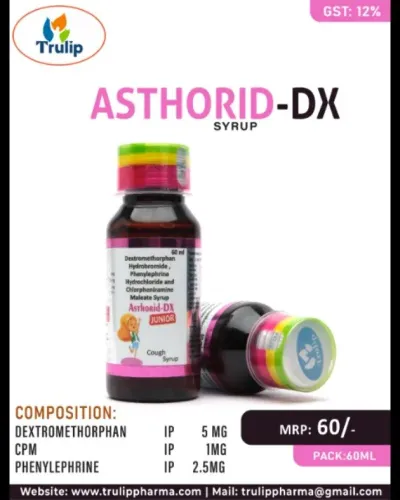

A large catalogue and an attractive margin do not prove that a PCD franchise will work in your territory. You need to test local demand, legal permissions, product evidence, contract protection, cash requirements and supply reliability before placing an opening order.
Key takeaways
- Map each SKU to a customer group and monthly sales estimate.
- Ask for the manufacturing licence and product authorisation documents.
- Compare stability data, batch records and test reports—not marketing claims.
- Calculate deposits, minimum orders, freight and credit terms before signing.
Does the franchise fit your territory, customers and working capital?
A portfolio fits your business only when its demand, prescriber access and order economics match the territory you can cover. Do not accept a long product list because it looks comprehensive; map every SKU to a real customer group, route to market and monthly sales estimate.
Use this PCD pharma franchise checklist before committing:
- Territory demand: Ask three nearby distributors and pharmacists which therapeutic categories, strengths and dosage forms move each month. Remove products supported only by broad national demand if local prescriptions do not justify them.
- Prescriber access: Count the doctors you can visit regularly, then match their specialties and prescribing habits to the portfolio. A strong cardiac range is unhelpful if you have no practical access to cardiologists or relevant general practitioners.
- Distributor reach: List the towns, stockists, pharmacies and hospitals you can supply within your delivery cycle. Check whether Schedule H or H1 products require records and controlled sales channels that your network cannot maintain.
- Working capital: Calculate the opening stock invoice, freight, taxes, promotional expenses and at least one replenishment cycle. Add cash tied up in distributor credit and slow-moving stock; do not treat the supplier’s credit period as available cash.
- Portfolio concentration: Set a sales target by SKU and reject a proposal that depends on one brand, one prescriber or one institutional buyer.
Request a territory-wise sales forecast based on comparable brands, not a promise of “high demand.” Start with a smaller range if your capital is limited, and expand after repeat orders prove the market. Territory exclusivity cannot rescue products you cannot sell.
Are the products legally authorised and correctly documented?
Before accepting a portfolio, obtain the manufacturer’s current manufacturing licence and match it to every proposed product, strength, dosage form, pack size and manufacturing activity. An ISO or “WHO-GMP” certificate does not replace this check.
Request these records and checks:
1. Verify the applicable licence, including Form 20 and Form 21 where relevant, the licensed premises, approved product list, renewal status and any retention-fee evidence. A tablet licence does not authorise injectables, sterile products, hormones or controlled schedules.
2. Confirm product registration or approval for each SKU. For a new drug or fixed-dose combination, check the permission trail under the New Drugs and Clinical Trials Rules, 2019, separately from the routine state manufacturing licence.
3. Compare the physical or approved artwork with the offer. It must show the medicine name, strength, dosage form, batch number, manufacturing and expiry dates, manufacturer, licence details, MRP, storage condition and required schedule warning.
4. Check the current NPPA ceiling price for the molecule, strength and pack. A printed MRP does not prove that the price remains compliant.
5. Identify Schedule H, H1 and X products before planning sales. Schedule H1 transactions require a separate register containing prescriber, patient and medicine details, retained for three years.
6. For temperature-sensitive products, obtain the labelled range, validated transport method, excursion limits and responsibility for stock damaged after a temperature breach.
Reject unexplained gaps. Ask for signed, current documents rather than screenshots or catalogue claims.
What quality evidence separates a controlled product from a marketing claim?
Do not accept “WHO-GMP,” “quality assured,” or “stability tested” as proof. Ask for documents tied to the exact manufacturer, product, strength, dosage form and pack size, then check whether the evidence covers the batch you will sell.
| Evidence | What it proves | What to check |
|---|---|---|
| Batch certificate of analysis | Results for one tested batch | Approved specification, test method, batch number, assay, impurities and laboratory scope |
| Stability data | Support for quality through shelf life | Protocol, batches, storage condition, assay, degradation results and proposed expiry |
| Manufacturing records | Control of production | Master formula, batch manufacturing record, deviation log and licence covering the activity |
| Quality-control documents | Testing and release discipline | Sampling records, equipment calibration, out-of-specification investigations and release approval |
| Complaint and recall records | How failures are detected and contained | Complaint register, investigation reports, recall history and regulator correspondence |
For medicines sold in hot, humid Indian conditions, request long-term ICH Zone IVb data: 30°C ± 2°C and 75% ± 5% relative humidity. A copied shelf life proves nothing. Compare certificates from several batches; one certificate does not demonstrate consistent control, and NABL accreditation applies only within the laboratory’s stated scope.
- Request the manufacturer’s current product-specific licence and approved product list.
- Ask for annual complaint totals, closure times and unresolved investigations.
- Confirm retention samples, batch traceability and recall-test results.
- Put complaint ownership, adverse-event reporting, recalls, destruction and reimbursement in the quality agreement.
Without those clauses, you can be left with recalled stock while the manufacturer controls the investigation and batch records.
Which contract terms protect your territory and calculate the real starting cost?
A verbal promise of monopoly rights protects nothing if another distributor can sell the same SKU in your area. Require a signed territorial agreement naming the geography, exact products and strengths, sales channels, online sales, tenders, house accounts, renewal conditions and consequences for missed supply or payment commitments.
| Term | Compare | Risk if unclear |
|---|---|---|
| Exclusivity | Territory-wide rights versus selected districts or SKUs | Another seller takes prescribers or institutional accounts |
| Minimum order quantity | Opening order and repeat-order minimums | Cash gets locked in slow-moving stock |
| Payment terms | Advance payment, credit period, and late-payment consequences | Working capital runs out before collections arrive |
| Freight and taxes | Who pays transport, insurance, GST and other applicable charges | The invoice exceeds the quoted product price |
| Returns | Credit or replacement, return window, notice and storage conditions | Unsold or damaged stock becomes your loss |
| Expiry replacement policy | Remaining shelf-life threshold and replacement or cash credit | Near-expiry inventory cannot be recovered |
Calculate the starting cash before signing: opening inventory, freight, taxes, licences, storage, sales materials, staff travel and at least one reorder cycle. For NLEM products covered by the Drugs (Prices Control) Order, 2013, check the ceiling price and the separate addition of applicable local taxes; an attractive margin calculation can become unusable.
Put these figures in writing:
- Opening order value and minimum order quantity
- Freight, tax and payment amounts by invoice
- Credit for approved expiry returns, recalls and transit damage
- Reorder cash required before your first customer payments arrive
Can the company maintain supply and support your operation after launch?
Do not accept “regular supply” as proof of supply continuity. Place a small trial order before signing and record the promised lead time, dispatch date, carrier, delivered quantity and remaining shelf life.
Repeat the test for a fast-moving SKU and a slow-moving SKU; a partner that performs only on easy orders will expose your operation later.
Ask for written answers to these operational points:
- What stock level triggers replenishment, and who contacts you during a stock-out?
- Will the company offer an equivalent pack, back-order, allocation plan or refund?
- What expiry-return window applies, and does replacement mean goods or cash credit?
- Which storage temperature, humidity limit and light protection appear on each label?
- For refrigerated products, who pays after a temperature breach, and where are the excursion limits, calibrated logger records and corrective-action procedure?
- Who handles complaints, adverse-event reports, recalls and urgent regulatory queries?
Use this comparison during a trial order:
| Test | Evidence to request | Disqualifying response |
|---|---|---|
| Routine dispatch | Written cut-off time, carrier details and delivery record | “We send when stock arrives” |
| Stock-out response | Named contact, allocation rule and credit or replacement terms | No written remedy |
| Cold-chain transport | Validated route, temperature logger and breach procedure | Generic “temperature controlled” claim |
| Daily support | Order channel, response time and escalation contact | Only a salesperson’s personal number |
Trulip Pharma, like any proposed partner, should be assessed against these same records rather than promises. Confirm that your warehouse, retailer and delivery staff can follow every storage instruction before accepting products; unsuitable handling can void returns and damage usable stock.
That practical test reveals whether the company offers franchise support after launch, not merely a catalogue before it.
Frequently asked questions
How do I assess whether a PCD pharma franchise fits my territory?
Match each proposed SKU to local prescribers, patient demand, competing brands, your sales route and a realistic monthly order estimate. Check that expected gross margin can support your working capital and operating costs.
Which legal documents should I request before choosing a PCD pharma franchise?
Request copies of the manufacturer’s drug manufacturing licence, product permissions, GST details, invoices and the product label showing the batch number, manufacturing date, expiry date and licence details. Confirm that the documents match the products offered.
What quality evidence should I compare between PCD pharma companies?
Ask for batch-specific certificates of analysis, test methods, specifications, stability data and details of the testing laboratory. Compare evidence for identity, assay, dissolution or disintegration, microbial limits and packaging controls where applicable.
Which contract terms matter in a PCD pharma franchise agreement?
Check territory exclusivity, product and customer restrictions, minimum orders, payment and credit terms, expiry replacement, damaged-stock claims, price revisions, promotional material, termination notice and dispute jurisdiction.
How can I calculate the real starting cost of a PCD pharma franchise?
Add the opening stock, minimum order value, freight, taxes, registration or documentation charges, samples, promotional materials, storage, sales travel and the cash needed to cover customer credit periods.