A low quoted price can hide short shelf life, weak documentation, unreliable replenishment, or inventory that never reaches a prescription. Use a weighted score, verify the licence trail, test quality and supply controls, and model the cash cost of a proposed territory before you sign a PCD agreement.
Key takeaways
- Score suppliers on quality, supply, demand and return before comparing prices.
- Ask for the Form 20B licence, product specifications and batch traceability records.
- Check whether certificates reflect active quality controls, not just completed paperwork.
- Test territory rights, minimum orders and stock replacement terms before signing.
Build a weighted scorecard before comparing quotations
Score every PCD pharma company evaluation against the same 100-point weighted supplier scorecard before comparing quotations. This prevents a low invoice price from outweighing weak traceability, poor supply or unsold stock.
| Criterion | Points | Evidence to score |
|---|---|---|
| Product and quality evidence | 20 | Current quality documents and sample records |
| Regulatory documentation and traceability | 20 | Product permissions, batch records and recall controls |
| Supply reliability | 15 | Fill rates, lead times and shelf-life-at-dispatch records |
| Portfolio fit with local prescribing demand | 15 | Demand estimates matched to packs and minimum orders |
| Landed margin after freight, taxes, breakage and expiry risk | 15 | Cost per saleable unit |
| Territorial policy and channel clarity | 5 | Written geography, channel and conflict terms |
| Credit terms and working-capital impact | 5 | Credit, title transfer and debit-note conditions |
| Field, medical and promotional support | 5 | Named contacts, response times and materials |
Award full points only when the supplier provides current documents, sample records or written terms. Set disqualifiers before adding totals:
- Manufacturing site cannot be independently verified.
- Product permission excludes the proposed strength or dosage form.
- Batch traceability is missing.
- Recall responsibility is undefined.
Model a sample order using expected sales, opening inventory, reorder timing, minimum remaining shelf life, expiry exposure and cash blocked in stock. A higher invoice price can still win when fill rates are better, usable shelf life is longer, minimum order quantities are lower and replacement disputes are fewer.
Include pharma franchise support only after its response commitments are documented.
Request the documents and reconcile every product detail
Request the document pack before discussing appointment terms, not after placing an opening order. Ask for:
- The manufacturing licence, product permission or marketing authorisation, and Certificate of Pharmaceutical Product India where relevant
- Batch-specific Certificate of Analysis, stability data, product composition and package insert
- GST details and invoices naming both the licensed manufacturer and the marketer
For every proposed product, compare the label with the licence and product permission. Match the name, strength, indication, pack size and dosage form. Record the manufacturing licence number, authorised premises, manufacturer details, batch manufacturing date and expiry date; then check batch records and relevant CDSCO or state drug-control databases.
A manufacturing licence verification exercise should also include a direct call to the named manufacturing site. Confirm that the site makes the product and that the marketer is authorised to sell it. Contract-manufacturing and loan-licence arrangements need separate checks against the parties and permissions named in the documents.
| Evidence | Strong paper trail | Warning sign |
|---|---|---|
| GMP certificate | Current, site-specific, with dosage-form scope and expiry date | Undated certificate with no site or scope |
| Certificate of Analysis | Batch number, specification, method, results, approving laboratory and release decision | Generic certificate reused across batches |
| Invoice | Manufacturer and marketer both identified | Brand owner alone is named |
Treat “WHO-GMP” as supporting evidence, not a substitute for Indian licensing. A Certificate of Analysis proves little if it cannot be tied to the shipped batch and an approved specification. Forecasts and quotations cannot correct a mismatch between the goods and their permissions.
Test the quality system, not just the certificate
A certificate proves only what its scope says. Before appointment, test whether the supplier can control release, storage, complaints and retrieval when something goes wrong.
1. Read the WHO-GMP scope and validity dates. Confirm the exact manufacturing site, dosage forms and product categories; tablet approval at one site does not cover injectables, sterile products or another premises.
2. Ask which IP BP USP standards apply to each product. Review a batch-specific COA showing the batch number, specification, test method, results, approving laboratory and release decision. Confirm testing covers identity, assay, dissolution, sterility or microbiological limits required for that dosage form.
3. For temperature-sensitive products, inspect qualified storage equipment, calibrated monitoring devices, transport temperature records and the written temperature-excursion procedure. “Store in a cool place” is not evidence of cold-chain control.
4. Examine production-like packaging for the drug name, active ingredients, strength, batch number, manufacturing licence number, manufacturer, manufacturing date, expiry date and Schedule H, H1 or X warning. Approve the goods, not artwork from a quotation.
5. Request written complaint handling, adverse-event intake, pharmacovigilance reporting, batch traceability, distribution records and recall procedures. Identify the responsible contact and escalation route.
6. Run a simulated recall. Ask the supplier to identify affected batches, quantities, customers and notification steps; slow or incomplete retrieval exposes weak control before a real patient-safety event does.
Match the portfolio to demand and prove product differentiation
A PCD product portfolio analysis starts with prescribing demand, not the catalogue count. Map each proposed product to local specialties, competitor brands, therapeutic gaps, dosage forms, pack sizes and prescription restrictions, then identify whether your existing clinics, pharmacies, hospitals and distributors can actually move it.
A large range can hide concentration risk. Flag portfolios dependent on one high-volume brand, active-ingredient source, manufacturing site or cold-chain route; one shortage, recall, licence suspension or temperature failure can disrupt the entire franchise.
Product differentiation requires evidence beyond a new brand name. Ask for:
- The formulation rationale, approved indications, strength justification and stability support.
- Comparative bioavailability or bioequivalence evidence when regulatory requirements apply.
- A production-like label showing readable font, accurate directions, active ingredients, strength, batch number, expiry date and prescription warnings.
- Dosing devices, measuring cups or syringes, tamper-evident packaging and child-resistant closures where appropriate.
The same generic name and strength do not prove therapeutic equivalence to a reference product. Request the relevant approval or study documentation.
| Portfolio check | Accept | Reject |
|---|---|---|
| Monthly demand versus MOQ | Stock can sell within the agreed shelf-life window | Opening stock exceeds realistic demand |
| Pack size versus customer use | Pack matches prescription and dispensing habits | Pack creates excessive leftover inventory |
| Remaining shelf life at dispatch | Meets your written minimum | Rotation fails before the minimum remaining shelf life |
Confirm every product’s label, licence, product permission, strength, indication, pack size and dosage form. A marketer’s offer does not prove that the manufacturer’s permission covers the product.
Stress-test supply, territory and the real commercial return
Measure what reaches the customer, not what appears on the quotation. A low unit price becomes expensive when large minimum order quantities, mandatory mixed cartons, freight, short shelf life or unsold stock consume your cash.
1. Request the minimum order quantity, mixed-carton rules, normal lead time, historical fill rate, stock-out history, minimum remaining shelf life at dispatch, expiry-at-dispatch policy, transport conditions and cold-chain requirements. Test these claims with a sample order.
2. Put the commercial rules in writing: damaged-goods replacement, short-dated stock, breakage allowance, expiry replacement policy, expiry returns, freight, taxes, promotional materials, payment milestones, PCD pharma credit terms, title transfer, credit limits and debit-note reconciliation.
Use this landed cost calculation: (invoice value + freight and taxes + promotional and handling costs + expected breakage, expiry and unsold-inventory cost) ÷ saleable units. A volume discount fails when it forces slow-moving stock.
3. Define territorial rights by geography, channel conflicts, parallel supply and the remedy when another distributor already serves the area. Test support with named contacts, response times, medical-information access and complaint escalation.
Assess Trulip Pharma with the same evidence: verified documents, sample-order performance and written terms, not its name or lowest quotation. Reject any arrangement that leaves expiry, recall, adverse-event reporting or replacement responsibility unclear. Compare the cash blocked in opening stock with expected monthly sales before committing.
A longer credit period does not rescue inventory that cannot sell before expiry.
Related products
 | Apibet Syrup by Trulip Pharma is an effective appetite stimulant formulated to support healthy weight gain and improved nutritional intake. View product → |
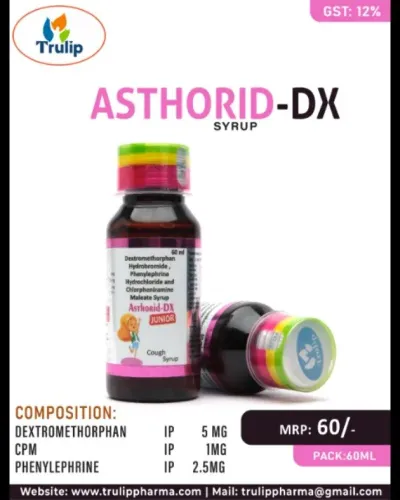
 | Asthorid-DX Syrup by Trulip Pharma is an effective formulation designed to provide relief from dry cough and throat irritation. View product → |
Frequently asked questions
How should you compare PCD pharma company quotations?
Build a 100-point weighted scorecard first, then compare quotations against quality, supply reliability, demand fit, territory terms and commercial return.
Which documents should you request from a PCD pharma company?
Request the Form 20B licence copy, product specifications, batch records and other documents needed to reconcile composition, dosage, pack size, manufacturer and traceability.
How can you test a pharma company's quality system?
Review more than certificates: check how the company handles batch traceability, testing records, complaints, recalls and document control.
What commercial terms should you stress-test before choosing a PCD pharma company?
Check territory exclusivity, minimum order quantities, lead times, stock replacement, expiry policy and the likely return after unsold inventory and selling effort.
Related products
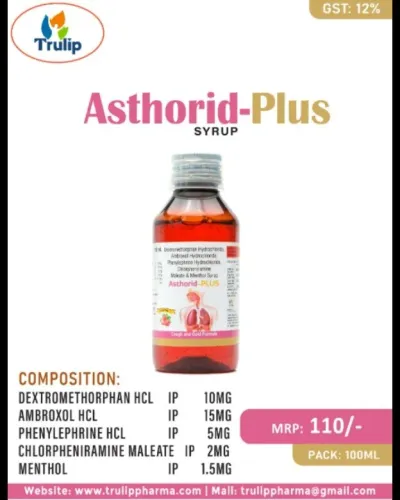
 | Asthorid-Plus Syrup by Trulip Pharma is formulated to provide effective relief from cough and respiratory discomfort. View product → |
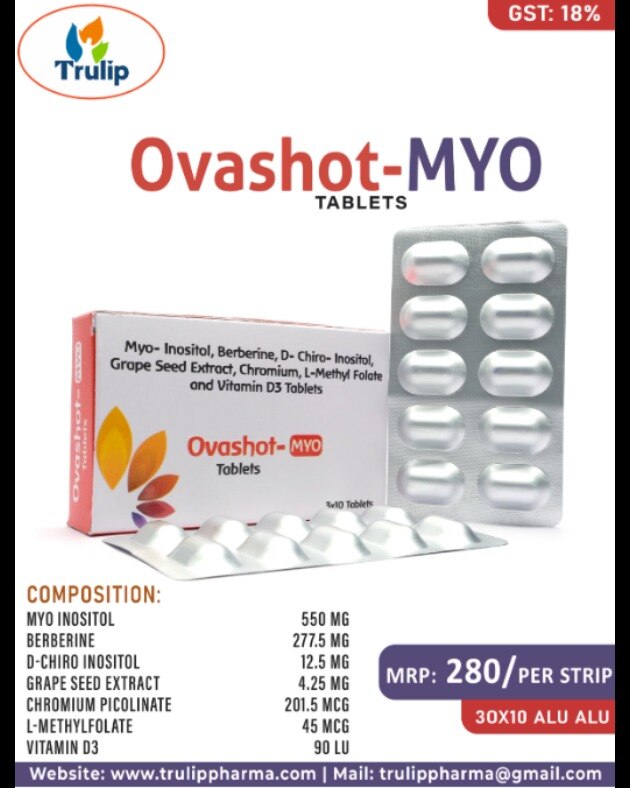
 | Ovashot-MYO Tablets by Trulip Pharma are specially formulated to support women’s reproductive health and hormonal balance. View product → |
 | Cefloip-CV 50 Dry Syrup by Trulip Pharma is a pediatric antibiotic formulation designed to effectively treat bacterial infections in children. View product → |
 | Cefloip-TZ Injection by Trulip Pharma is a powerful broad-spectrum antibiotic formulation used for the effective treatment of severe bacterial infections. View product → |