A low invoice price and a large product catalogue do not tell you whether a PCD pharma partnership is legally sound, commercially workable, or easy to manage after the first order. By checking licences, batch evidence, market fit, landed cost, stock risk, and contract controls, you can reject weak proposals before they tie up your money.
Key takeaways
- Ask for a Form 20B licence copy for each proposed SKU.
- Match every product to your dosage form and local distribution network.
- Calculate freight, taxes, minimum order quantities, and expiry-related losses.
- Put complaints, recalls, expiry returns, and product changes in writing.
Can the company prove that each proposed product is legally manufactured?
Ask for the current drug manufacturing licence for every proposed SKU before signing or placing an opening order. Confirm that the licence names the manufacturing premises and covers the exact dosage form: tablet, syrup, injection, sterile product, beta-lactam, hormone, or ophthalmic product. A WHO-GMP or ISO certificate does not prove approval for a particular product.
| Manufacturing arrangement | Documents to inspect | What it proves |
|---|---|---|
| Own plant | Licence naming the offered premises and dosage form | The company’s stated facility is licensed for that form |
| Third-party manufacturer | Manufacturer’s licence, written manufacturing arrangement, and marketer details | The named contractor, not merely the marketer, is authorised to manufacture |
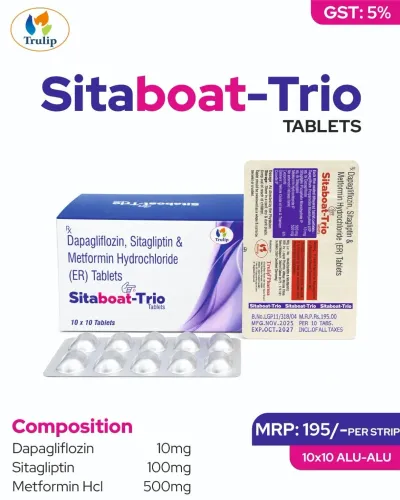
Inspect a physical pack and obtain a GST invoice for pharma products. Check:
- Manufacturer name and address, manufacturing-licence number, batch number, manufacturing date, expiry date, composition, strength, dosage form, pack size, and MRP
- Marketer name and address, complaint-contact information, tamper evidence, and matching details on the invoice
- Missing, altered, or over-stickered information, which creates recall and traceability risk
Compare the marketed label and promotional claims with the approved product information. A different ingredient, strength, dosage form, or therapeutic claim is a reason to pause. Make this PCD pharma company verification step product by product; a clean certificate cannot cure an unapproved SKU.
What quality evidence should you request for every SKU?
Request a batch-specific certificate of analysis, not a brochure or sample pack. The certificate of analysis must identify the batch and report applicable tests such as assay, dissolution, microbial limits, and impurities against the approved specification.
| Document | What it proves | What to check |
|---|---|---|
| Certificate of analysis | Results for one batch | Batch number, test methods, limits, results, approval signature |
| Product specification sheet | The product’s target requirements | Composition, strength, dosage form, appearance, pack size, and permitted limits |
| Batch release record | Authorisation to distribute that batch | Review status, deviations, investigation, and release approval |
For every SKU, compare:
- Composition, strength, dosage form, pack size, label accuracy, tamper evidence, and appearance
- The supplied batch with an authenticated shipment sample, including seal, batch details, and printed dates
- Results from successive batches, not one favourable report
Request the batch release record, product specification sheet, and the stability data pharma quality staff used to justify the claimed shelf life. Long-term stability evidence matters most for liquids, short-expiry products, new packaging, and temperature-sensitive products; accelerated data alone does not replace an appropriate long-term programme.
For cold-chain products, ask for defined storage limits, qualified shipping packaging or lanes, temperature records or data-loggers, excursion procedures, and the rule for releasing or rejecting exposed stock. Keep these documents with the shipment record so a later complaint can be traced to a specific batch, journey, and decision.
Does the proposed product range match your local market and distribution network?
A catalogue is sellable only when each SKU has a route to local market demand, not because the PCD product portfolio is long. Compare every item with prescriber demand, therapeutic segments, competing brands, dosage forms, paediatric versus adult demand, and prescription restrictions.
Map the proposed range against your existing distributor relationships and sales-team capability. Remove duplicates in crowded categories and flag products needing specialist promotion, hospital access, or storage you cannot provide.
Use a SKU scorecard with these fields:
- Target prescriber
- Expected monthly movement
- Competing brands
- Pack size and expiry period
- Storage requirement
- Route to market
Choose a short opening range supported by prescription enquiries, retailer requests, distributor commitments, or prior sales records. Do not accept a catalogue-wide opening order before evidence exists.
| Check | Strong fit | Warning sign |
|---|---|---|
| Target prescriber | Your team already reaches them | Specialist or hospital access required |
| Dosage and audience | Local adult or paediatric demand is documented | Form is unsuitable or demand is untested |
| Distribution | Existing route and storage meet requirements | Cold-chain or controlled prescription handling unavailable |
| Competition | Clear gap or differentiator | Several entrenched brands with no advantage |
Pharma franchise exclusivity has value only in a signed clause naming exact SKUs, territory, sales channels, duration, minimum purchase, reserved accounts, and consequences for supplying another distributor. A promise covering “the range” is too vague to protect your market.
What will the order really cost before the stock is sold?
A 20% gap between MRP and invoice price is not profit. Calculate net landed cost per saleable unit after freight, GST treatment, breakage, expiry loss, promotional stock, and credit-note delays. Your working capital for pharma franchise is:
Opening inventory + freight + GST − usable credit.
Then divide cash tied up by realistic monthly sales to estimate months before recovery.
Ask for these figures in writing:
- Minimum order quantity, opening order value, price list, retailer margin and distributor margin
- Credit terms, payment schedule, freight charges, and whether GST is charged, included, or recoverable
- Number and value of free or promotional units, replacement rules for breakage, and credit-note timing
- Remaining shelf life at dispatch, packaging-change exposure, sales-team effort, and the percentage realistically sold before expiry
| Test | What to calculate | Warning sign |
|---|---|---|
| Fast-moving SKU | Saleable units × net landed cost ÷ monthly movement | More than three months of stock |
| Slow-moving SKU | Units sold before expiry ÷ opening units | Large near-expiry balance |
| Promotion | Cost of unsold promotional material and free units | Supplier counts free stock as profit |
Check NPPA ceiling-price exposure SKU by SKU for formulations on the National List of Essential Medicines. A high printed MRP is not automatically usable. Apply this worksheet to Trulip Pharma and every other supplier, rather than accepting a branded price list at face value.
Also record the realistic proportion sold before expiry; one late credit note can erase the apparent margin.
What must the agreement say about expiry, complaints, recalls, and changes?
Before first payment, write the expiry, complaint, recall, and change protections into the agreement, not a sales email.
State the minimum remaining shelf life at dispatch in months or percentage, whether near-expiry stock receives replacement or credit, the notice period, freight payer, credit-note deadline, and whether free or promotional units qualify under the pharma expiry replacement policy.
Require a named complaint procedure for complaint handling pharma:
- Name the complaint and quality contacts, acknowledgement time, investigation deadline, and adverse-event escalation route.
- Identify who can authorise a pharma product recall, who informs regulators and customers, and who pays retrieval and replacement freight.
- Require batch-distribution records showing every customer who received each batch.
| Protection | Written term | Risk if absent |
|---|---|---|
| Expiry | Minimum shelf life, notice, replacement or credit, freight, credit-note timing, free-unit coverage | Unsaleable stock becomes your loss |
| Recall | Authority, response times, customer notification, batch records, retrieval costs | You cannot isolate affected customers |
| Temperature | Data-loggers, shipping responsibility, excursion decision, rejected-shipment cost | Exposed stock may be released without evidence |
Ask for the manufacturer’s change control pharmaceutical manufacturing policy covering API source, excipient, site, process, container, and test method. Require advance notice before a change affects the approved product or label.
For temperature-sensitive stock, define storage limits and the release-or-reject rule. Before signing, request one recent batch file, one physical pack, the proposed invoice, and draft expiry and recall clauses. Inconsistent answers justify pausing, not negotiating only on price.
Frequently asked questions
How can you verify that a PCD pharma company legally manufactures its products?
Request the current drug manufacturing licence for every proposed SKU. Check that it names the manufacturing premises and covers the exact dosage form and product category.
What quality evidence should you request for every pharmaceutical SKU?
Request product-specific quality records, including the batch number, certificate of analysis, test specifications, manufacturing details, and expiry information. A WHO-GMP or ISO certificate alone does not prove approval for a particular product.
How do you know whether a proposed product range fits your market?
Compare the range with local prescribing patterns, patient demand, therapeutic categories, dosage forms, pack sizes, storage needs, and the reach of your distributor network.
What costs should you calculate before placing a PCD pharma order?
Add the product price, GST, freight, loading charges, minimum order quantities, promotional materials, storage, credit costs, and losses from slow-moving or near-expiry stock.
What should a PCD pharma agreement say about expiry, complaints, recalls, and product changes?
Specify the acceptable remaining shelf life, expiry-return process, complaint response times, recall responsibilities, replacement or credit terms, and advance notice for changes to products, prices, or packaging.